
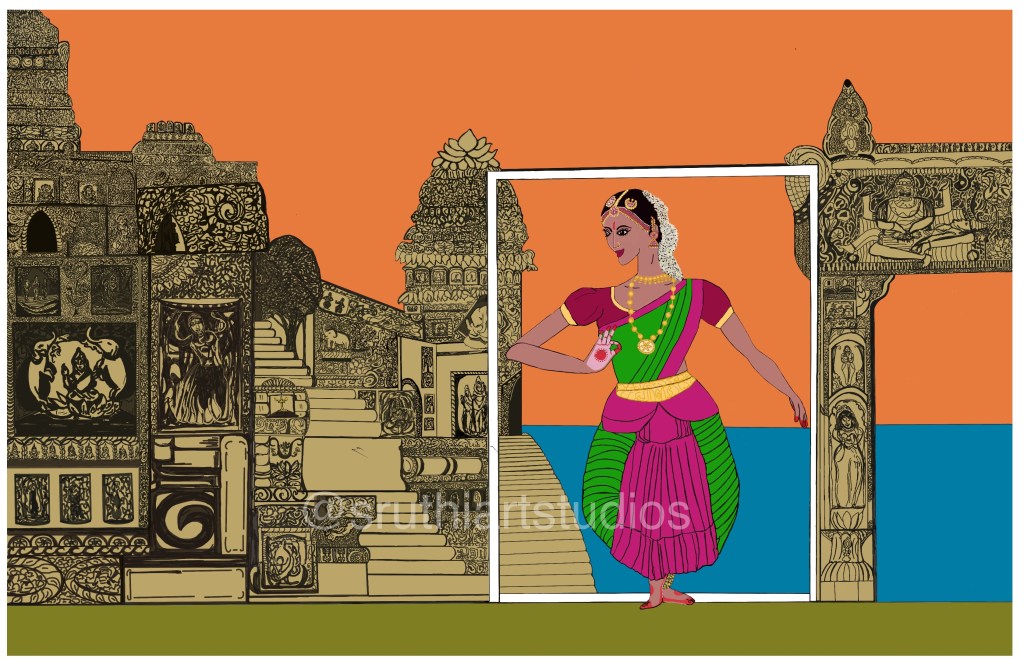
Traditional practices present a visual richness into all forms of artistic endeavour, these have flourished through centuries of different space and time.
Integration and adaptations of cultures, migrations and movement of people have presented opportunities for creative practices to move beyond borders. Dance and music are one such representation, varied, vibrant, presenting individuality and different beliefs.
My digital painting of the dancer takes inspiration from the art and architecture of temples in South India, splendours showcasing some of the most amazing artisan skills. Centuries later the creative genius of these masters survive in the untainted wonders we see today.
The temple premises centres on an inner sanctum where the divine idol is placed, within a small chamber accessed through a single passageway. These areas are accessible to the high priest, a tradition retained for the sanctity of traditions and customs. The sanctum is surrounded by an enclosed space which consists of corridors of columns and additional shrines. The sculptures visible here display the amazing skill and precision with accuracy of the craftsman.
On a visit to an ancient temple in Kanyakumari (Cape Comorin), we had a guided tour of it’s auspicious premises. The sculptures here had detailed craftsmanship, such as sculptures of maidens with each plaited hair strand visibly carved into black granite. Hands clasped together in namaste, every spacing between the fingers precisely spaced to let thin streams of light pass amongst the dark stones. This remarkable workmanship is present in every aspect of the temple structure: such as the large gopuram gateway friezes that display mythological stories pertaining to the temple shrine.
Bharatanatyam dancers and music resounded these temple premises. My art focuses on the appearance of the dancer, the integration of visual appearance and her performance. Beginning with the saree, a costume woven from pure silk to allow the easy mobility of movement, the vibrant colours to enhance the rhythmic movement of dance, enhancing the aesthetically created image. The belled anklets revered by the performer symbolising her skill. The traditional temple jewellery worn by the dancer consist of studded red and green stones with pearls and a headpiece holding the hair in position. A small garland of flowers positioned over the plaited hair. The crown of the head have representations of the sun and the moon, a forehead centrepiece and earrings with extensions. Additional jewellery of necklaces, armlets, ornamental belt and more glisten in the light.
The final vital piece of enhancement that completes the dancer are cosmetic layers of colour. especially her eyes to aid her expressions, an integral part of the performance. Lastly a red dye is applied on the finger tips and toes, with further circular patterns on the feet and the palms of her hand, thus directing the eyes of the beholder towards the mudras and gestural hand movements.
My digital painting is a small glimpse into these art forms. Bharatanatyam is a performance of emotion, music, rhythm expressed to present the essence of Indian culture through classical dance. All of which aid this spiritual practice. I cannot write about the true depth and beauty of this ancient dance form, as it is something to be experienced by the reader. I simply write to present the number of crafts that have worked together in unison to create this artform.
 Sruthi Art Studios
Leave a comment